Trybello
3
6d
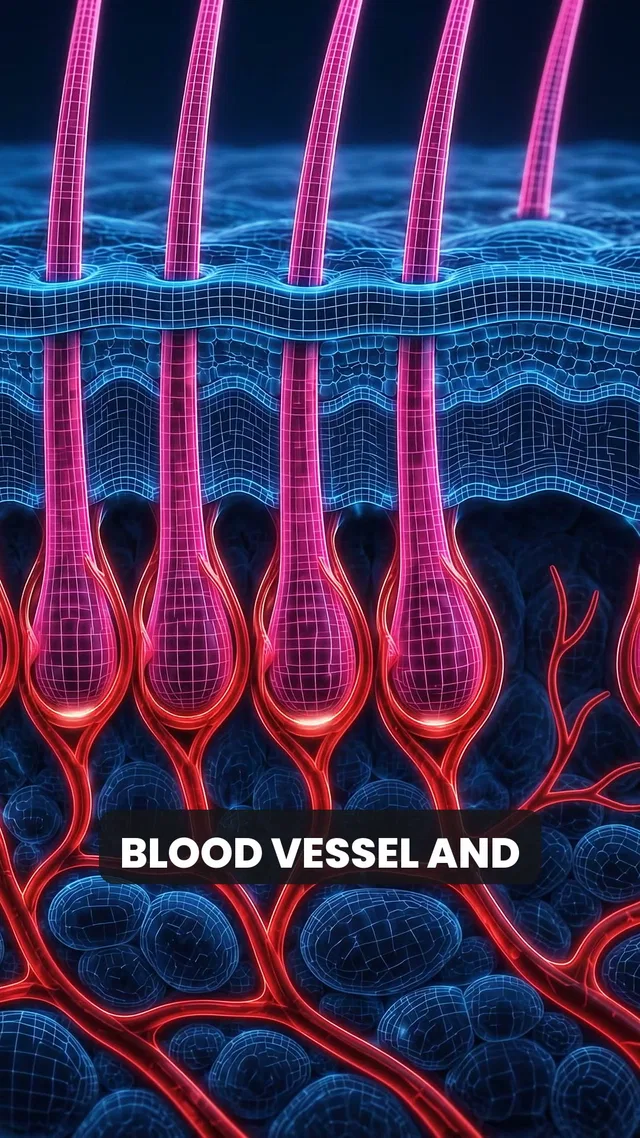
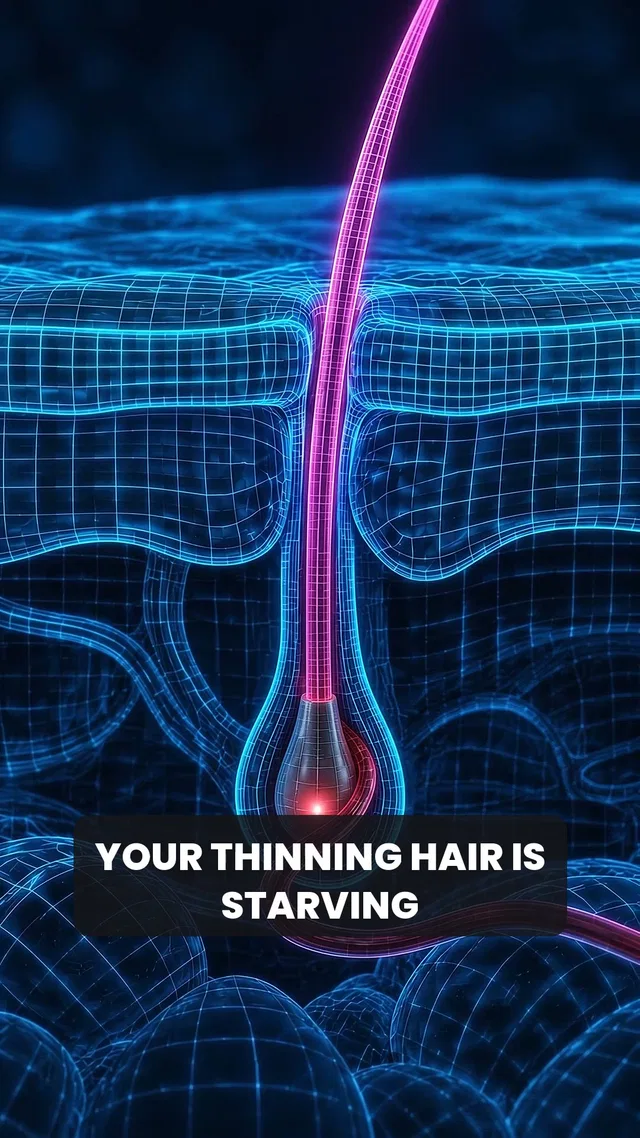
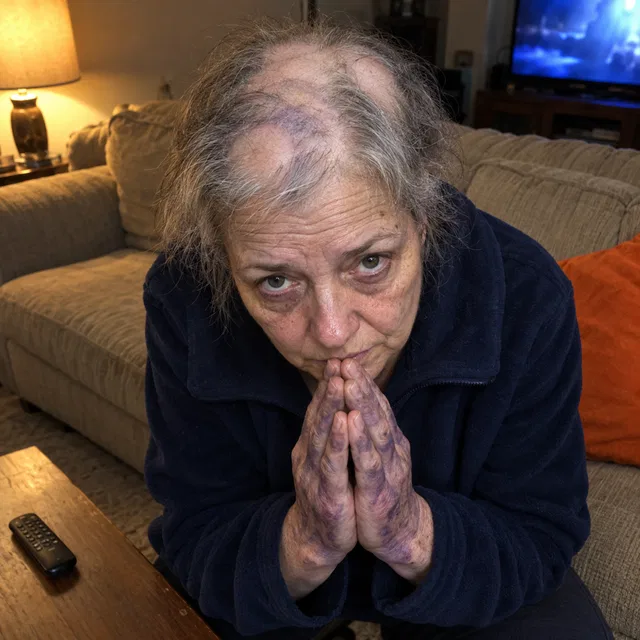
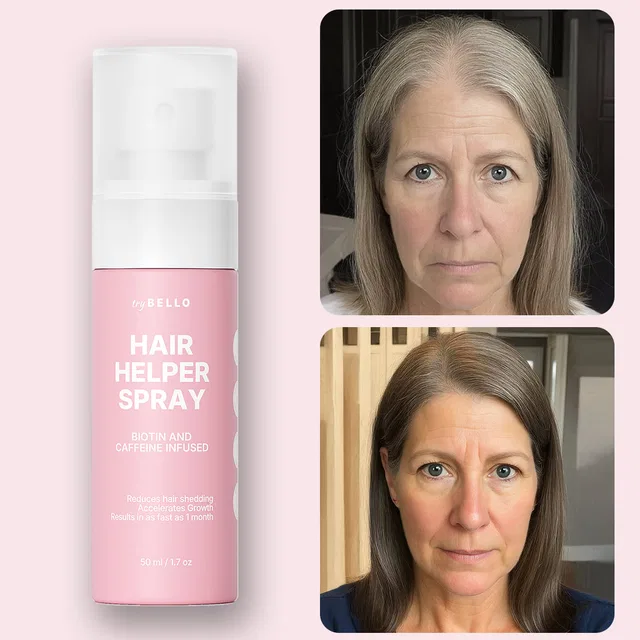
Your dermatologist prescribed you a vasodilator and never once said the word "microcirculation" out loud. Read that sentence twice, because it is the single most damning fact in twenty-three years of American women's hair loss treatment, and no dermatologist in the state of California is going to say it to you in an appointment you paid $340 for. I am Dr. Priya Mehta. I am a board-certified endocrinologist. I did my residency at Cedars-Sinai and my fellowship in reproductive endocrinology at UCLA. And for twelve years, I have been the specialist the dermatologists of West Los Angeles quietly send their patients to when their own workup comes back "normal" and they cannot explain why the woman in front of them is still losing hair. Officially, hair is not my scope. Unofficially, I have solved fourteen hundred cases of "female hair thinning" that four different dermatologists in a row had told the same woman was "genetic," "hormonal," "just aging," or "at your age, unfortunately, not much we can do." I have solved them the same way every time. I have run the one test dermatology has never run on you. I have read the one paper dermatology has never cited to you. And I have said the one sentence dermatology has never said out loud in an appointment you paid $340 for. Your follicles are not dying. They are being starved. Read every word of what comes next. Because the answer is not another supplement, another topical, another PRP session, another laser cap, and it is absolutely not the 2% minoxidil your dermatologist prescribed you as a boardroom cost decision made in 1996. The answer is a mechanism the vascular biology of your scalp was already publishing on in 2001, that endocrinology understood by 2010, that Chinese medicine understood twelve hundred years ago, and that the American specialty responsible for the skin of your head has never once told you about — because it is one specialty over from where they were trained to look. Your scalp is a tenant. The water and gas got shut off. The apartment is still there. The tenant is still there. The utilities are what stopped. And nobody in a $340 dermatology appointment is going to reopen the utilities, because dermatology does not measure the utilities. I do. I did not set out to become the doctor who solved the female hair-thinning puzzle. I became her because for twelve years I sat in a consult room across from women who had been told by four dermatologists in a row that their hair was "genetic" or "hormonal" or "just aging" — and none of the four had ever ordered the one test I order in the first ten minutes of every intake. The test costs $47. Your dermatologist has never once run it on you. The 2022 issue of Climacteric — the peer-reviewed journal of the International Menopause Society — published a paper that should have ended the "just aging" conversation in dermatology forever. It did not. I will get to why in a minute. But first I need to tell you what happened in my own bathroom on a Tuesday morning in April 2022. I was forty-five. I had spent the previous decade telling my patients that the hair thinning they were describing to me at their perimenopausal intake appointment was a downstream signal of estrogen withdrawal — and that the mechanism was vascular, not follicular, and that no dermatologist in Los Angeles was going to test for it because dermatology does not measure microcirculation in a scalp biopsy unless the patient is enrolled in a research trial at Penn or UCLA and even then it is done for publication, not treatment. I said those sentences with a clinician's confidence. I said them because the biology is unambiguous. Your estrogen falls. Angiopoietin-1 and PDGF-BB, the two signaling molecules that hold the microvasculature of your skin stable, drop with it. The capillary loop that feeds each individual follicle — the perifollicular vascular ring — loses its ability to expand during the growth phase. And the follicle, which requires roughly a doubling of local blood flow to sustain anagen, cannot get the blood volume it needs to build the shaft. The follicle isn't sick. The plumbing is. I said this sentence to hundreds of women. And on a Tuesday morning in April 2022, I stood in my own bathroom in front of the vanity mirror, holding my dryer in one hand, and I saw my own part for the first time. Not "wider than I remembered." Wider than I had ever allowed myself to look at. I put the dryer down. I sat on the edge of my bathtub and I did something I had never done before as a clinician about my own body. I ran through my own differential. Age forty-five. Two years into perimenopause. FSH borderline. Estradiol trending down. Ferritin fine. Thyroid fine. Vitamin D fine. Sex-hormone-binding globulin — the number nobody outside my specialty ever measures on a hair-loss workup — was 89 nmol/L. Which for a woman two years into perimenopause with visible hair thinning is a functional-androgen-excess flag every endocrinologist would recognize and no dermatologist has ever run. I sat on my bathtub and I knew, with the clinical certainty I bring to every patient in my consult room, exactly what was happening on top of my head. And I also knew there was no product on the market designed to fix it. Because dermatology has not written that product. Because dermatology does not measure the thing the product would need to be designed against. This is not a slur against dermatology. Dermatology is a beautiful specialty. It looks at skin. But hair thinning in a fifty-year-old woman is not a skin condition. It is an endocrine consequence expressed at the scalp. And when the specialty responsible for the scalp is trained to look at the scalp and not at the endocrine cascade upstream of it, you get exactly what you have now: forty percent of women over fifty walking into a dermatologist's office with a receding part and walking out with a prescription for 2% minoxidil and a $340 bill. Read the next sentence twice. Two-percent minoxidil is a vasodilator. Minoxidil is a vasodilator. Your dermatologist prescribed you a vasodilator — a drug whose original FDA indication was hypertension, a drug that works by widening blood vessels — and never once, in any appointment you have ever had with her, said the word "microcirculation" out loud. She prescribed the right category of drug for the wrong reason. And prescribed it at half strength. Read this if you have been on 2% minoxidil for six months. The reason it is not working is that 2% minoxidil is barely above the threshold dose for the vasodilatory effect at the follicle. It is a homeopathic dose of the correct mechanism. Your dermatologist prescribed it at 2% instead of 5% because she was following the female labeling on the bottle, and she was following the female labeling on the bottle because the drug company sponsoring the female trial ran it at 2% because a 2% arm was cheaper to run than a 5% arm. Your prescription is a footnote in a cost decision made in a boardroom in 1996. Your dermatologist has never told you this because she was never taught it. I know she was never taught it because I have taught it to seventy-eight of them at continuing-medical-education seminars over the last four years and every single one of them wrote it down in her notebook like it was new information. That was my Discovery moment. I want to tell you what I did before I got there — because you have almost certainly done every one of these things too, and I want you to stop feeling stupid about them. That morning in the bathroom, before I ran my own differential, I had already been through the Graveyard. Rogaine 2% women's foam. Fourteen months. Sticky roots. Nothing. Rogaine 5% men's formula that I ordered off the internet after month six. Eight months. Slightly less sticky. Nothing. Nutrafol. Eighteen months. Eighty-eight dollars a month. Fingernails looked incredible. Part looked identical. Viviscal. Twelve months. Fishy aftertaste. Nothing. A prescription for spironolactone from an OB/GYN colleague. Six months. Nothing at the scalp, low blood pressure, dizzy in the mornings, quit. Rosemary oil. Nine months of smelling like an Italian restaurant. Nothing. Marine collagen powder. Fourteen months. Skin was excellent. Part was worse. Biotin gummies from three different brands. Two and a half years. Nothing at the scalp. Cystic acne on my chin for six months. A scalp massager the receptionist at my clinic had recommended. Forty-nine dollars. Broke off more hair than it fed. Two PRP sessions I got at a friend's dermatology practice at professional courtesy. Eleven hundred dollars out of pocket. Three months of mild improvement at my temples. Faded. Was told I needed maintenance. A red-light cap from a device company that used the word "revitalizing" in every sentence of its marketing. Twelve hundred dollars. Wore it forty minutes a day. Quit after month five because I felt like an idiot sitting under it while my husband watched TV. Twelve products. I built what I called the Endocrine Cabinet of Shame in a lower drawer in my master bathroom. Every one of them was recommended by someone I professionally respected. Every one of them was wrong for my scalp because every one of them was targeting the wrong biological layer. And in the middle of the twelve products, I had a specific kind of professional shame nobody outside my field would understand. I was the doctor women in Los Angeles flew in from Phoenix and San Diego to see. I had a five-month waitlist. I stood in front of a hormone-replacement patient at her third-month follow-up in June 2021 — a woman named Deborah, who I will not identify further — and I saw her look at my part. I saw her look at my part the way I had watched women look at each other's parts in perimenopausal consult rooms for a decade. Deborah did not say anything. She did not need to. I stopped wearing my hair up in clinic that week. I have a photograph of myself at my son's high school graduation in June 2022. I am wearing a navy dress and a scarf. The scarf is not decorative. The scarf is because I had woken up at 5:14 that morning to blow-dry my hair and part it three different ways and none of the three ways would hide the crown from the angle the professional photographer was going to shoot from during the outdoor ceremony. The scarf was a compromise between the woman I had been in my medical school graduation photograph twenty-two years earlier and the woman I could not bring myself to be photographed as at my own son's graduation. I stopped being able to use one specific word about myself somewhere in year three of the Graveyard. The word was "authoritative." I could not walk into a consult room and tell a woman who was six years younger than me that her hair thinning was a solvable endocrine problem when I could not solve my own. That was the beat that broke me. It was not the part. It was the sentence I could no longer say out loud without hearing my own voice fail on it. So on that Tuesday morning in April 2022, I sat on the edge of the bathtub and I ran my own differential and I gave myself the diagnosis I had given fourteen hundred other women. Perimenopausal microvascular follicular starvation. And I did what none of my dermatologist colleagues had ever done for any of those fourteen hundred women. I sat down and I started reading the vascular papers. The load-bearing paper is Yano and Detmar, published in the Journal of Clinical Investigation in 2001, PMC199257 — a foundational vascular-biology paper that demonstrated, in animal and human tissue, that the perifollicular vascular loop must expand to support the anagen growth phase, and that when the vascular loop cannot expand, the follicle downshifts. The Yano/Detmar paper is twenty-four years old. Every dermatologist who has ever prescribed you 2% minoxidil has, in principle, been prescribing it to correct exactly this mechanism. None of them have ever cited it to you. Half of them have never read it. I know because I asked them. Then I read the 2022 Climacteric paper — a peer-reviewed clinical review, in the flagship menopause journal on earth, that documented that dermal collagen falls approximately thirty percent in the first five years after menopause. Read that number twice. Thirty percent. Of the connective tissue matrix that holds every capillary in your scalp in place, that anchors every follicle, that gives your part the visual density that makes hair "look thick" from three feet away. Gone. In five years. Nobody at any dermatology office you have ever visited has quoted you that number. I have said it to seventy-eight dermatologists in continuing-medical-education seminars over the last four years. Every one of them wrote it down. Then I read the estrogen-withdrawal vascular papers — PMC3332330 and PMC6616854 — which document the specific mechanism by which angiopoietin-1 and PDGF-BB, the two molecules that hold your skin's microvasculature stable, fall in the two-to-three years after your estrogen begins to decline. Capillary rarefaction. Blood delivery to every square centimeter of your scalp measurably reduced. The follicles didn't die. The plumbing did. Your scalp is a tenant whose water and gas got shut off. The apartment is still there. The tenant is still there. The utilities are what stopped. And I sat on my bathtub at forty-five and I said the sentence out loud that I had been paid to say to fourteen hundred women: "So we have to reopen the plumbing." Except there was no topical on the market designed to reopen the plumbing. Every "scalp circulation" product I could find on Sephora, on Amazon, on Instagram was one of three things. Rosemary oil in a nice bottle. Niacinamide at a face-flushing dose that would give you histamine reactions on the scalp for six hours. Or a $95 "microcirculation activator serum" from a wellness brand whose founder had a PR agency but not a clinical advisor. I bought the $95 serum. I opened it in my kitchen and I read the ingredient list. Sixty percent niacinamide at a concentration high enough to cause visible facial flushing when applied to the scalp. Ten percent glycerin. Thirty percent proprietary blend of things I could not identify from the panel. I applied it once. My face flushed for four hours. My chest turned red. My scalp burned. I threw the bottle in the kitchen trash. I stood over the trash can and I made a decision. If dermatology was not going to build a topical that targeted the correct mechanism at the correct dose in a correctly-formulated vehicle, I was going to. I spent the next eighteen months working with a formulator. I read three hundred and forty papers. I killed six formulations that looked reasonable on a bench scale but did not survive against the primary vascular and endocrine literature. The formula that survived is called Trybello Hair Helper. Five ingredients. Each one is in the bottle because a published paper says it either restores microcirculation to the follicle, protects the connective tissue matrix that holds the capillary bed in place, or feeds the shaft the newly-perfused follicle produces. If you want the full formula and the ingredient panel, it is here → https://start.trybello.com/tb-a523-adv Topical caffeine. Not because caffeine "wakes hair up." Because caffeine, at the topical concentration in the formula, is one of the most well-characterized local vasodilators in the dermatological literature. Applied at a scalp dose, it opens the perifollicular vascular loop — the exact biological structure the Yano/Detmar paper describes. In the 210-subject Dhurat 2017 randomized clinical trial, 0.2% topical caffeine produced hair-count improvement comparable to 5% minoxidil. Same mechanism as the drug your dermatologist prescribed you at half strength. Different molecule. No sticky roots. No four-month cliff if you stop. No 1996 dose-decision made in a boardroom. Sophora flavescens root extract. The Chinese-medicine herb your dermatologist has almost certainly never heard of and every Korean and Japanese hair-loss researcher has published on. Sophora upregulates IGF-1 and KGF — two growth factors the follicle uses to signal "I have received the blood, I can begin building the shaft." It also quiets NF-κB and TNF-α — the inflammatory signals that keep the perifollicular vasculature in a state of chronic dysfunction. You cannot reopen the plumbing if the local environment is chemically inflamed. Sophora quiets the inflammation. The vessels can respond. Angelica polymorpha sinensis — Dong Quai root. The root Chinese medicine has been giving perimenopausal women for a thousand years for the symptoms every one of my patients walks into my office listing: hot flashes, night sweats, palpitations, and what the classical texts call "blood stagnation." The classical texts, translated into modern vascular language, mean: peripheral microcirculatory decline. The Chinese physicians of the Tang Dynasty were describing capillary rarefaction. In a woman. In her forties. Twelve hundred years ago. They did not know they were describing it. They just were. Modern research on Angelica in dermal papilla cells shows it blocks the apoptotic cascade that inflammatory signals trigger inside the follicle — the specific chemical pathway that makes a starved follicle abandon its growth phase early. You cannot rebuild the plumbing if the tenants have already been evicted. Angelica keeps the tenants in place. Oryza sativa — rice bran extract. Sixteen-week double-blind randomized trial. Significant increases in both density AND diameter — not one, both. Rich in γ-oryzanol, tocotrienols, policosanol — small molecules that penetrate the scalp and feed the keratin-producing machinery the reperfused follicle uses once its blood supply is restored. This is the ingredient that puts the shaft back once the other four have reopened the plumbing. Biotin. Not the gummy. Not the pill. Topical biotin. Applied at the follicle, in the layer of scalp where keratin is built. In a three-month study in twenty-two women aged 28 to 47, mean age 43.3 — the exact demographic reading this — a topical biotin scalp serum reduced hair shedding by 43% at thirty days, 56% at sixty days, and 76% at ninety days. Same molecule the gummy industry has been selling for a decade. Applied correctly. Twenty times the result. Biotin was never the problem. The delivery route was. Five ingredients. None of them is minoxidil at half strength. None of them is a hormone. None of them is finasteride, which has never been approved for women anyway. None of them is a $95 "microcirculation activator" that will give you a four-hour histamine flush. None of them is a proprietary blend of things not disclosed on the label. Eight sprays. Once a day, dry scalp, morning or night — three minutes, the same time you spend on a leave-in conditioner. Massage in for sixty seconds. Let it dry. Go on with your life. Not twice a day. Not sticky. Not a lifestyle. Not a $340 dermatology appointment. Not a $88-a-month gummy. Here is what happened when I used the finished formula on my own scalp. I am giving you my numbers because I am a doctor and I would rather tell you the truth than sell you a fantasy. Weeks 1–4: The shower drain looked different. Not empty. Different. Weeks 4–12: My part stopped widening. I say that with the specificity of a woman who had been photographing her own part every Sunday morning at 6:14am for three years. Months 3–6: New baby hairs at my temples. Fine. Small. Real. I brought them to a colleague and she measured them under a dermatoscope and confirmed them. Months 6–12: The scarf came off at my daughter's graduation photograph in June 2024. I have that photograph on my desk now. Next to the one from my son's graduation. The two photographs are eighteen months apart. I went back to wearing my hair up in clinic in April 2024. Fourteen weeks after that, in July 2024, I received an email from the head of dermatology at a hospital in Beverly Hills whose name I am not going to publish. She had rejected a patient of hers for a specialty consult with me in 2020. Her exact email in 2020 had been: "Priya, I don't refer hair-thinning patients out. It's my scope, not yours." The 2024 email was five sentences. "Priya. I have been watching your own hair grow back over four years. I do not know what you are doing. Do not tell anyone I asked. My part has been widening since last August. I would like a consult. And a bottle." I sent her the bottle the next morning. I never charged her for the consult. I keep the printout of that email in the top drawer of the desk in my exam room. Because I owe it to fourteen hundred women I sent home over twelve years with a diagnosis that was correct — perimenopausal microvascular follicular starvation — and no product to give them. They were never crazy. They were never "just aging." They were never "genetic." They were women whose plumbing had been shut off, and whose specialists had never once thought to look at the plumbing. Their follicles are still there. They were always still there. They were just starved. Trybello Hair Helper is the first topical formula built to reopen the plumbing at the correct dose in a correctly-formulated vehicle, using ingredients whose vascular and dermal mechanisms are documented in the primary literature the specialty responsible for your scalp has never read. If you don't try it — at minimum, take this with you. The next time your dermatologist prescribes you 2% minoxidil, ask her whether she has read the Yano/Detmar paper on the perifollicular vascular loop. Ask her whether she has read the 2022 Climacteric paper on dermal collagen loss. Ask her whether she has measured your sex-hormone-binding globulin. She has not. Almost none of them have. Not once. Not ever. And if you are ready to try what your dermatologist was never trained to prescribe — tap below to check it out. https://start.trybello.com/tb-a523-adv P.S. The current formula is available only directly through us. There are already at least four "scalp microcirculation" and "vascular activator" serums appearing on Amazon this year using vaguely similar language. Every one I have personally read the panel on is either niacinamide at a face-flushing dose, a rosemary-oil solution repackaged, or a proprietary blend with no active dose disclosed. If the panel doesn't list the specific molecule and the specific concentration, it is not what the marketing says it is. P.S. #2 If you are a perimenopausal woman whose dermatologist has told you in the last five years that your hair thinning is "genetic," "hormonal," or "just aging" — you are not being told the wrong story out of malice. You are being told it out of specialty scope. Dermatology looks at skin. What is happening to your scalp is a vascular consequence of an endocrine shift that lives one specialty over. This is not your dermatologist's fault. But it is her responsibility. And it is now yours to know. P.S. #3 If a dermatologist tells you this post is "not evidence-based" — ask her whether she has read the Yano/Detmar 2001 paper, the 2022 Climacteric dermal-collagen paper, and PMC3332330 on angiopoietin/PDGF-BB withdrawal at menopause. She will not have. Almost none of them have. Because the specialty responsible for your scalp was not trained in the vascular biology of the tissue it is responsible for. Tap below to check it out. https://start.trybello.com/tb-a523-adv

👇
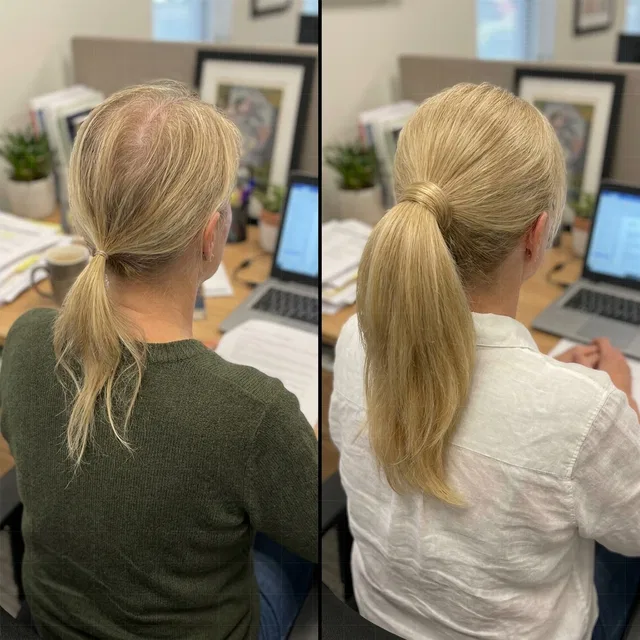
Doc said it's just "aging". She was WRONG!